Mustang Girls

mustang girls
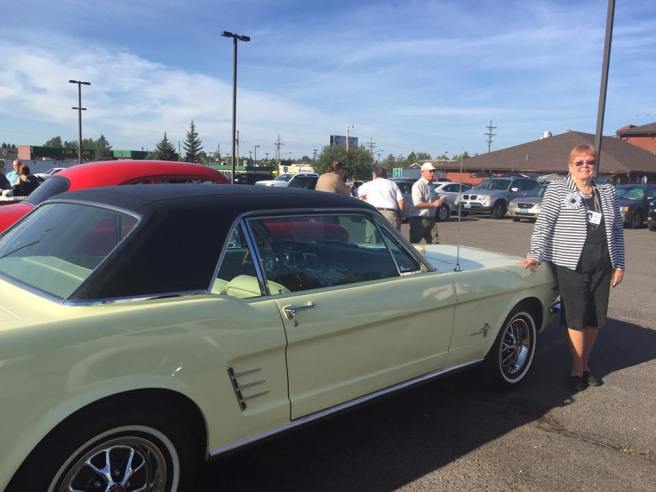
My sister, Jane, at her 50th high school reunion in Cheyenne, Wyoming with our 1965 Ford Mustang.

I grew up in Wyoming, the cowboy state. Wyoming has a population of about half a million; spread over approximately 100,000 square miles (about 6 people per square mile). Winters are long and cold. The wind blows most of the year, great in the summer for blowing away mosquitoes.  Wyoming cowboys and girls (the few there are) are a hardy, independent, eccentric group.

I was reminded of how quirky Wyomingites are with a story my sister shared from her fiftieth high school reunion last week in Cheyenne.

First, she sent me a picture of a 1965 yellow  Ford  Mustang with a black faux leather roof. Her note said, “This is our car.”  The picture did look amazingly like the car Jane and I drove in high school and college.  I texted her, “Does look just like our car.”  She texted back, “It is our car.” A guy at her reunion had bought the car from our dad for $600 in about 1977, refurbished it and kept it in pristine condition all these years.  Only in Wyoming with such a tiny population would you run into someone who knew you and owned your car for almost 40 years.

I remember the day in 1965 when, Dad brought the mustang home. He drove up in front of our house in Cheyenne.  I looked out the picture window and was thrilled.  The car was only a year old, very few miles,  yellow with a hard top, automatic gear shift in the center console,  creamy leather interior smoothed like butter over bucket seats.  Quite a “ride” for two girls from Wyoming!  The mustang went back and forth to high school though we lived about four blocks away from school.  Then it traveled to college when my sister needed a car her senior year for student teaching.  I was a freshman at the same school so I was one of the few freshmen on campus with access to “wheels”–a literal joy ride!

The Mustang stayed with me all through college after Jane, graduated. The car had two busy summers while I was in college. During that period, I was Lady-in-Waiting (1971) and then Miss Frontier (1972) for Cheyenne Frontier Days, the world’s largest out-door rodeo.  I spent those summers traveling with a Native American Dance troupe, attending civic functions around Wyoming, Nebraska and Colorado, and riding my quarter horse, Debbie.  The car took me everywhere “pony  style”, the nickname for the Mustang’s compact design . Because the “Frontier Days Royalty” had all kinds of outfits for the rodeo, the tiny trunk was frequently filled to the gills with a variety of colored boots and hat boxes filled with expensive felt cowgirl hats.  The back seat carried white silk blouses and buck skins (the official outfit), along with several hand-tailored western suits for night shows and rain gear.

The Mustang and I travelled down to Arizona when I attended graduate school at Arizona State University in Tempe, Arizona. The problem with the Mustang in Arizona was it didn’t have air conditioning.   I only went to graduate school during the school year so the heat problem was limited to late August and early June.  But driving back to Wyoming was a bear.  My sister flew down to drive with me the spring I graduated (1975).  The car broke down in transit back to Wyoming.  Now ten years  old, Dad got me a  brand-new Mercury Bobcat to go to Washington State University in Pullman where I worked on my doctorate.
bobcat
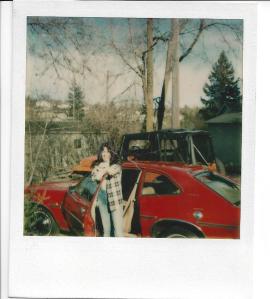
 Bobcat and I in Pullman, Washington


After the Mustang retired from driving girls, the car was parked behind our house in Cheyenne, out in the open.  Dad used it as his golfing car, carrying his golf clubs out to the Country Club every day in summer.  A young man at the time cruising the alley spotted the car and stopped to inquire if Dad wanted to sell it.  And so a good long-term family friend went to another apparently forever home.

If the Mustang could talk, it would have many tales to tell. Jane and I would drive  from Cheyenne to Hastings, Nebraska for  college and back  on I-80.  We were almost always speeding. The speed limit at that time was 75.  One time, when we were going almost a 100 miles an hour, I could feel us barreling off the road.  I remember shouting at Jane as we were heading off, “Slow down!”  She calmly replied, “Too late now!”  as we swerved into the high grasses.  Fortunately for us, much of the road between Wyoming and Nebraska is flat plains.  We just rolled to a stop, backed up and were off down the road again.  Thinking of our escapades now gives me shivers.  But in the late sixties we would drive like the wind, with reckless abandon, racing everywhere to the next big adventure.  After all we were Mustang girls, who grew up on the wild, windy, Wyoming plains.

Ride around girls,

Ride around girls,

Don’t you ever slow that Mustang down!
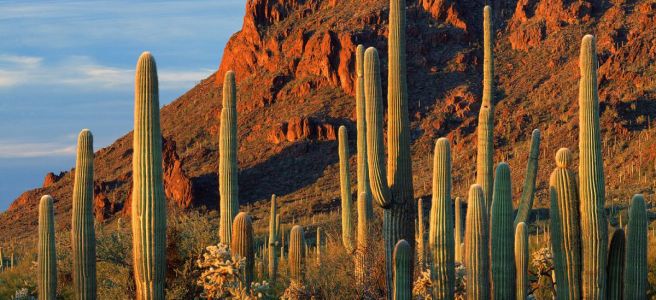
 

My Tiny Arizona Home, the right size at the time

I am an HGTV (Home and Garden Channel) fanatic. I particularly like House Hunters International and recently, I have started watching Tiny House Hunters.

landscape-1442330245-tinyhouset
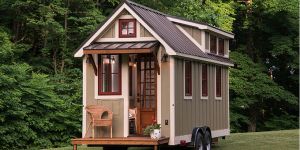
Cottage Style Tiny House on wheels

I am intrigued by all the varied designs and nooks and crannies that can be folded into 500 square feet or less. I am also fascinated by the reasons people desire tiny homes.  The premise of the show is that Americans are looking to downsize, simplify their lives, travel more, and just save money. Probably my biggest reason for being interested in tiny houses is that I lived in a tiny home before there was a tiny house movement.


asu-251x240
I received a masters degree in sociology in 1975.

When I was a graduate student at Arizona State University (ASU) in the mid-seventies, my first apartment by myself was a  ground-floor studio  measuring approximately 200 square feet.  A studio apartment combines living, bedroom, kitchen into one space with a separate bathroom. While the new tiny homes may have many exquisite details such as granite, wood paneling on walls and ceiling, my apartment was the scaled down version with cinder block walls, rattan furniture in the living area, a formic dining table for two, wooden beads surrounding the  double bed for privacy, regular closet and a kitchen along one wall. The piece de resistance of the kitchen was the stove with an oven above, pull-out burners and an oven below.   In 1973, microwave ovens were not ubiquitous as they are now.  They were just starting to show up in high end kitchens (first counter top micro wave was distributed by Amana in 1967).  My home had a front porch with patio furniture looking out on a shared swimming pool and a back door that opened to the parking area.  The climate in Arizona is such that having the outdoor space is the same as adding a substantial amount of square footage, especially with a swimming pool available for everyone in the complex. The apartment complex and pool were well maintained and the location was close enough to campus to bike.

I felt like a queen in my special place. One couldn’t do much decorating because of the cinder block  walls. But I did have posters scattered about.  Unlike folks who are downsizing to a tiny house, the studio was  upsizing for me from  a dorm room and then a shared two-bedroom apartment. I had plenty of space for one and I enjoyed having my own privacy.

The biggest drawback to the Arizona place was not size but no pets.  I love animals.   When I was in graduate school, I didn’t really have the time or financial resources for pets so that lack of one was not  a problem.   A few years later when I had a regular job, one of my first goals was to purchase a house so I could have animals without the restrictions placed on pets by landlords.

My memories of Arizona are magical. I loved the University, the independence, the desert, the hot days and cool nights. I have memories of playing soft ball andpar 3 golf during day. At night, we would sip wine coolers on patios warmed by fire pits and accompanied by live music.  These were all new and exotic activities as a cowgirl who grew up in Wyoming and went to a Presbyterian College in Nebraska for my first experience away from home.

While I was at ASU, I had a number of guy friends. One of them, Dave, was a desert rat. He had an orange jeep and would take us out on extreme dirt roads to view the gorgeous red mountains, cactus and wild flowers, all found in isolated, primitive areas.  After one such adventure,  I was cooking my specialty, spaghetti with red meat sauce. Actually, I am not a good cook, so this was my go-to meal for guests. Dave and I sat down to a festive Italian meal and the next thing I know he’s bolting to the bathroom sicker than a dog.

Cleaning up in a hurry, I dumped everything down the garbage disposal immediately clogging the drain. The  maintenance man, Charlie, came right over with a plumbing snake to clear the line. When he started pushing it into the drain, we heard a scream next door. Apparently, the drains were connected and the metal snake had popped out of my neighbor’s sink–a startling experience.  Meanwhile, Dave was moaning on the bed behind the beaded curtains, not enough privacy in times of distress.

Then Charlie removed the U drain below the sink, emptied the nasty red sauce and slimy pasta contents into a bucket.  He promptly stood  up and dumped the bucket into the now empty sink. At which point, the entire contents of the bucket shot through the open drain making a huge mess on the kitchen floor and splattering Charlie and I.

Dave emerged from his bead sanctuary to see what the commotion was about. When he saw the mess, he decided he was well enough to go home and recover.  Dave and I never discussed whether the illness was brought on by my cooking or a rapid stomach bug. I do know he never chose to eat with me again. The lesson from this experience is that houses are like spoiled children in need of regular attention. They have the ability to throw a tantrum by breaking down, leaking, flooding, cracking, at the most inconvenient times. Almost anything connected to a house is expensive. A good do- yourself-person in the family is a gift.

The other memory I have of my ASU home is not so amusing. One week night, I received a phone call from my former roommate, Pat, telling me she was coming right over and to tell no one. When she got to my house, she had a fellow grad student, Kathy with her. Kathy was hiding from her abusive husband. I was the only safe place the two of them could find.  I was safe because I didn’t know Kathy’s husband. Kathy and I sat up all night because Kathy was terrified.  Unfortunately, this happened more than once. I had never seen anyone so frightened as those times Kathy was escaping her raging, violent husband.

There is a happy epilogue to this story. Kathy did finally divorce her husband. She finished her  masters degree,  successfully pursued a doctorate and became an expert in the field of family violence.  As Kathy and I sat together on those terrifying nights, I made up my mind that no one should be that frightened in their home. I have spent many years in Wyoming and Idaho volunteering for and donating to programs committed to providing safe havens for women and children who are victims for domestic violence.

The lesson from my experience with Kathy is that houses (the four wall structure) are not homes (socio-cultural experiences created by the individual(s) living in the structure). Kathy had a better house than most graduate students because her husband had a regular job.  But a physical structure that does not provide safety and is not a refuge in times of trouble is not a home.  Today, in our world we have many refugees fleeing unsafe settings (estimated at about 60 million people around the globe today).  Any night in the United States, there are over half a million homeless individuals (men, women and children). Domestic violence is the third leading cause of homelessness in the United States.  In other words, there are many people in need of refuge in our world today.

My 200 square foot studio apartment provided me with a lovely home for a year when I lived in Arizona.  My home was also a place of shelter for someone else in need.  I am grateful that my life has been blessed with  many homes filled with a great deal of love. Square footage truly doesn’t matter when seeking out a house, but the strength of character  and heart of those who reside within does.

gratitude